Skip to content
Eloi Prat Padró

Projects

Most of these started because a specific person needed something. I think that makes for better engineering than starting from an idea, because the constraints are real and someone notices when I get them wrong.

ALS communication device

Sole developer2020 and 2026

Row–column scanning, one of the device's ways to type: one press picks the lit row, the next the lit letter.

Mercè has ALS. She cannot speak, and she can no longer type normally. The tablet running this app is mounted on the arm of her wheelchair and travels with her all day, and that shaped every decision in it.

The first version was built in 2021 through CiberEdu, in MIT App Inventor: a keyboard she typed on directly using the hand movement she still had. She used it for about five years.

When her condition worsened and she could no longer type directly, I rebuilt it in Kotlin with three ways to enter text: single-switch row–column scanning (there's a simulation of it on this page), a cursor moved with buttons, and a classic keyboard.

It works in Catalan, Spanish and English, and it's open source under GPLv3.

One rule I learnt building accessibility software: options must be additive. A new way of working goes beside the old one, never instead of it.

  • Kotlin
  • Android
  • Accessibility
  • Offline-first
Source →

Air quality sensor network

Founder, hardware and workshops2019-2022 and 2026

This started as the innovation project of the CiberEdu First Lego League team in 2020, which won first prize for the Innovation Project and a nomination for the FIRST Global Innovation Award.

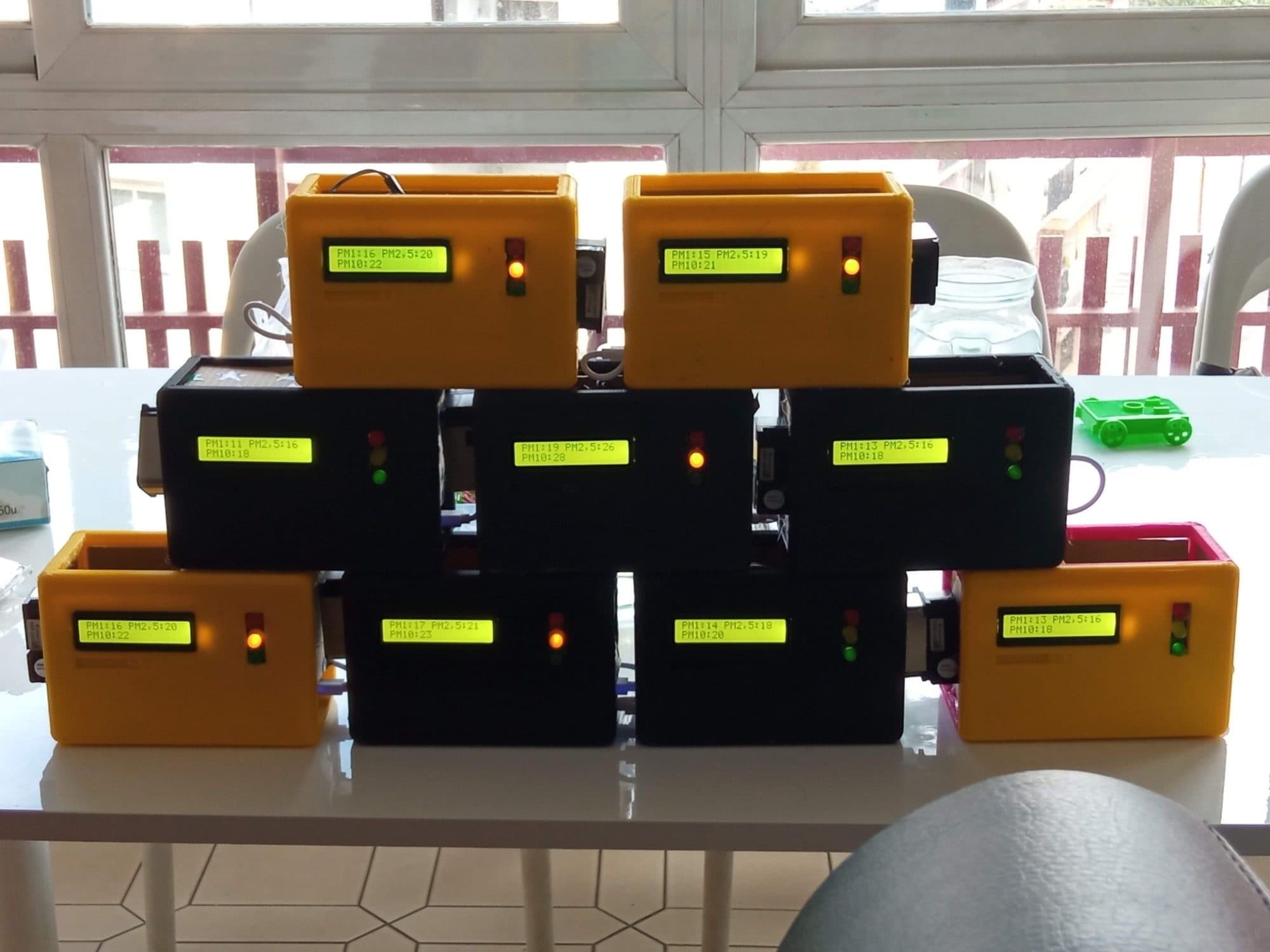
We built around thirty PM particle sensors and distributed them to schools across Granollers, my city, which has a real air quality problem. That way students could check the PM levels on their own street at different times of day, instead of a national average.

Alongside the hardware we ran citizen sensor-making workshops through 2021, roughly eighty hours of them, and a family workshop on building air quality meters at the Biblioteca Can Pedrals in October 2021.

In 2026 I brought it back for an embedded prototyping class at UCSB, and I'm now looking at an open-source map for shared sensor data.

Ten air quality sensors in 3D-printed cases, their screens showing particle readings
  • Raspberry Pi
  • Python
  • Sensors
  • Civic tech
Source →

WebSight

Co-founder, Equitech Futures Institute2026

We started it as a five-person international team at the Equitech Futures Institute: Marika Pescosolido, Yanis Kerampran, Luyanda Mhlongo, Hab'il Anayte' Xol Par and me. Now Marika, Arjun Verma and I run it.

The extension is an AI companion for the browser. It reads and describes what is on screen, so finding your way around an unfamiliar page feels more like asking a sighted friend than fighting a screen reader through a badly built layout.

Alongside it we ran a survey built to hear from blind and low-vision users directly, in thirteen languages.

  • Chrome extension
  • Accessibility
  • LLMs
Extension source →Survey source →

Nisha digital newspaper

Project manager2023 — 2025

Students from the villages around MUWCI wrote it in Marathi, about whatever they chose.

The kids speak Marathi, but the good resources for learning are in English, a split linguists call diglossia. A newspaper in their own language treats Marathi as a language you can learn in.

We also wanted them to get used to saying what they think in public. India is a democracy, but it doesn't have a deep protest culture, and citizen journalism felt like a first step.

And it gave them a way into subjects their school day never reaches, which they can't find online in their own language either.

I won the RISE for the World fellowship for this project in 2024.

  • Education
  • Marathi
  • Community

Doorman

Sole developer2026

People say they want to leave Instagram, but they don't, because it still does what it was originally made for: keeping you in touch with your friends. That part has slowly become a side feature, and what people want to escape is the Reels. So Doorman blocks the infinite feed (YouTube Shorts, Instagram Reels, TikTok, Snapchat) while messages, friends' posts and search keep working.

Kotlin, Android only, GPLv3. It has no network access at all, so nothing leaves the phone. The matching rules live in a JSON file so they can change without shipping a new build.

The worst mistake it can make is a false positive. If it blocks something you actually wanted, you'll uninstall it or raise your time limit. Letting one Reel through is survivable.

  • Kotlin
  • Android
  • Privacy
Source →

CiberEdu

Founder and director2014 — present

Formally it's an “associació per a l'acompanyament al món digital”, an association that helps people find their way in the digital world.

A group of friends wanted an extracurricular our school didn't offer, so we started it ourselves. My mother helped hugely and coached us for some of those years. I led the team: recruiting, picking competitions, setting the build schedule, splitting the work, and keeping a team of volunteers together through school changes, four coaching partners and a pandemic.

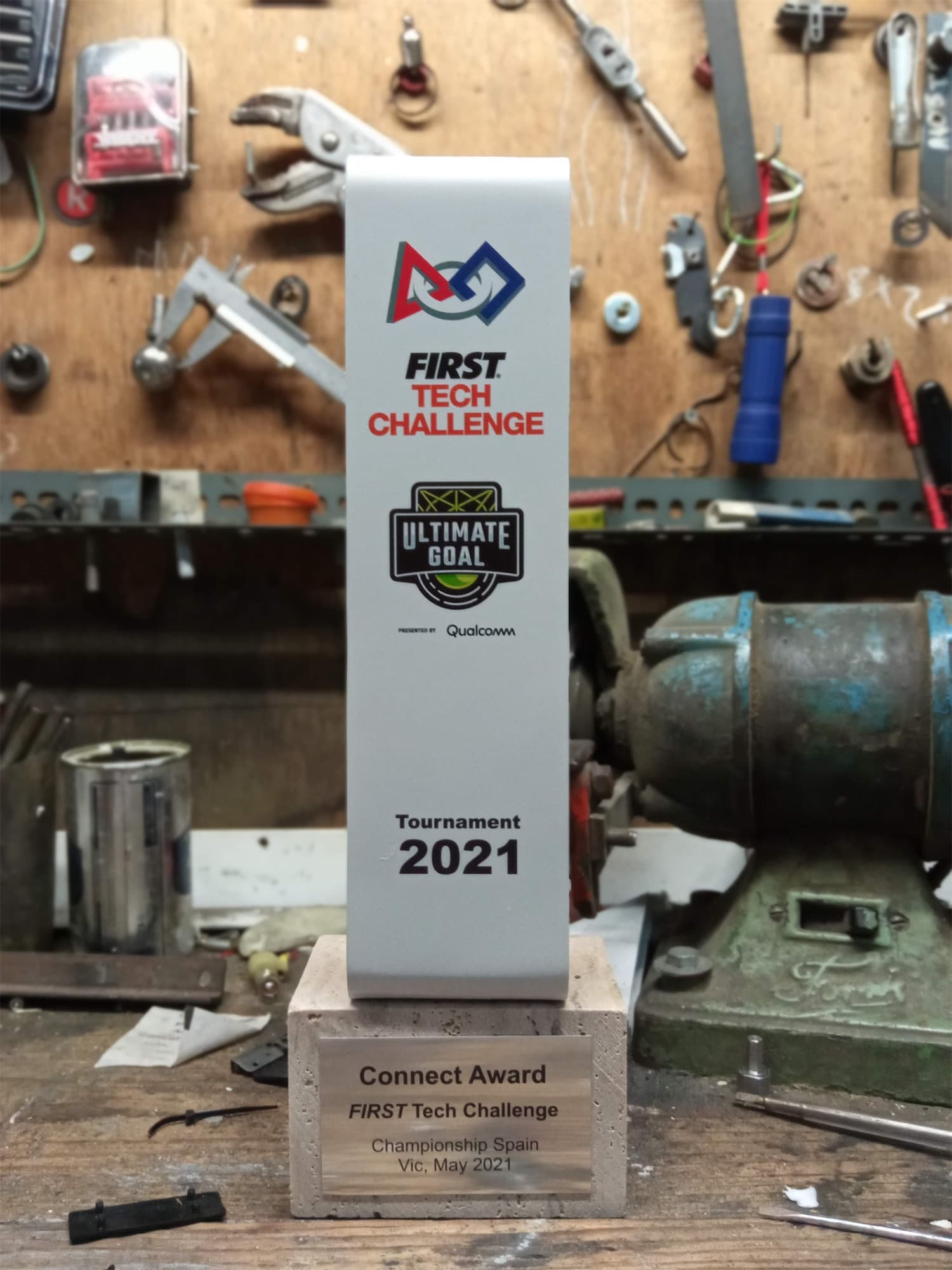
The competition record runs from a first prize at Dia d'Aprentik in 2014 through second at RoboCat 2017, first prize for the Innovation Project at First Lego League 2020 with a FIRST Global Innovation Award nomination, the Connection Award at First Tech Challenge 2021, and third at RoboCat 2022 out of thirty-five teams.

The air quality sensors came out of CiberEdu. So did the first version of the ALS device, and ten 3D-printed reproductive health teaching models delivered to the health department of Granollers City Council. Nowadays CiberEdu is the association I run my projects through, which gives them a legal structure.

A FIRST Tech Challenge trophy on a workbench in the workshop
Our FIRST Tech Challenge trophy, 2021.
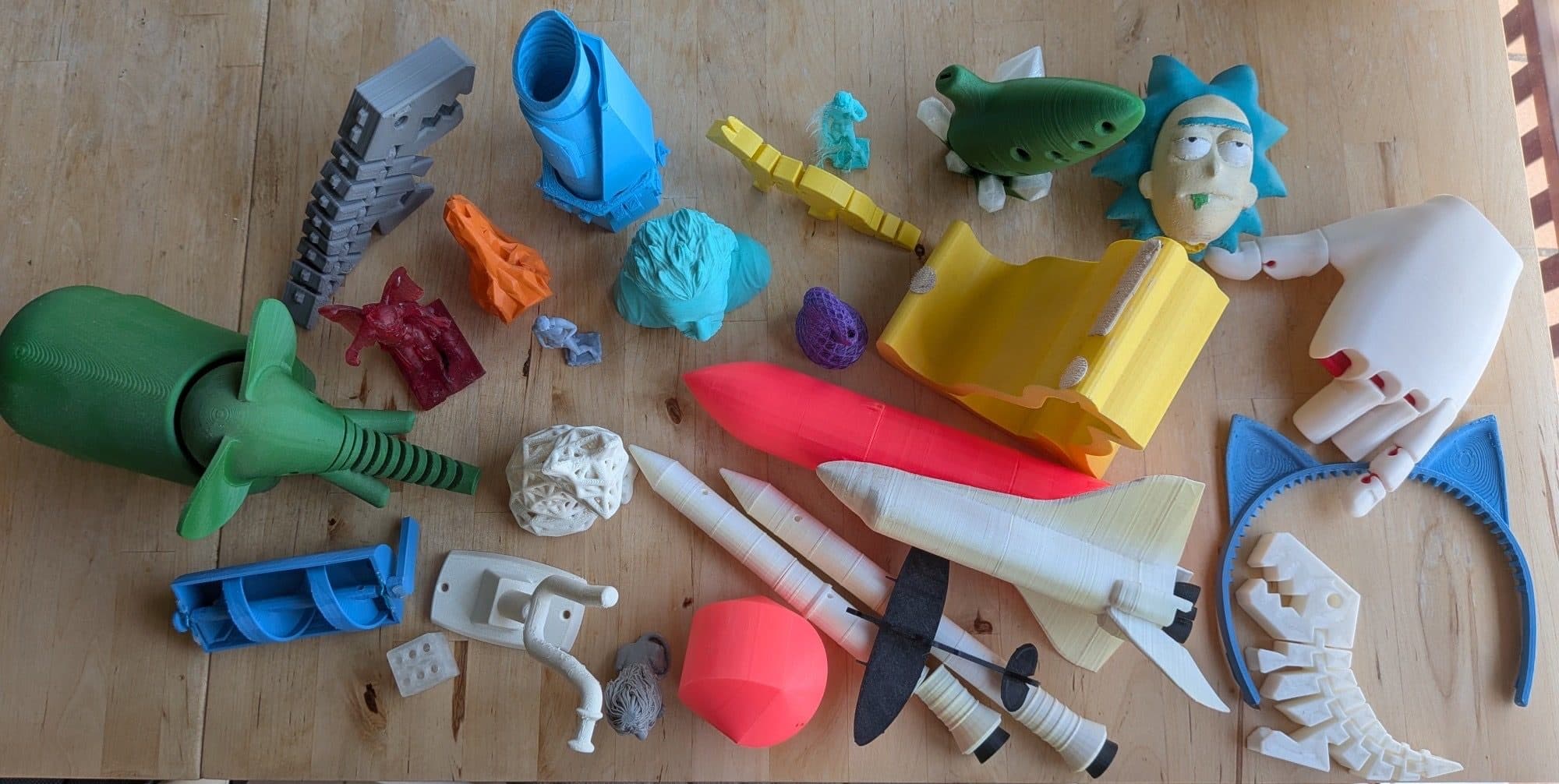
A table covered in 3D prints: a space shuttle, rockets, a hand, an ocarina and more
  • Robotics
  • 3D printing
  • Community